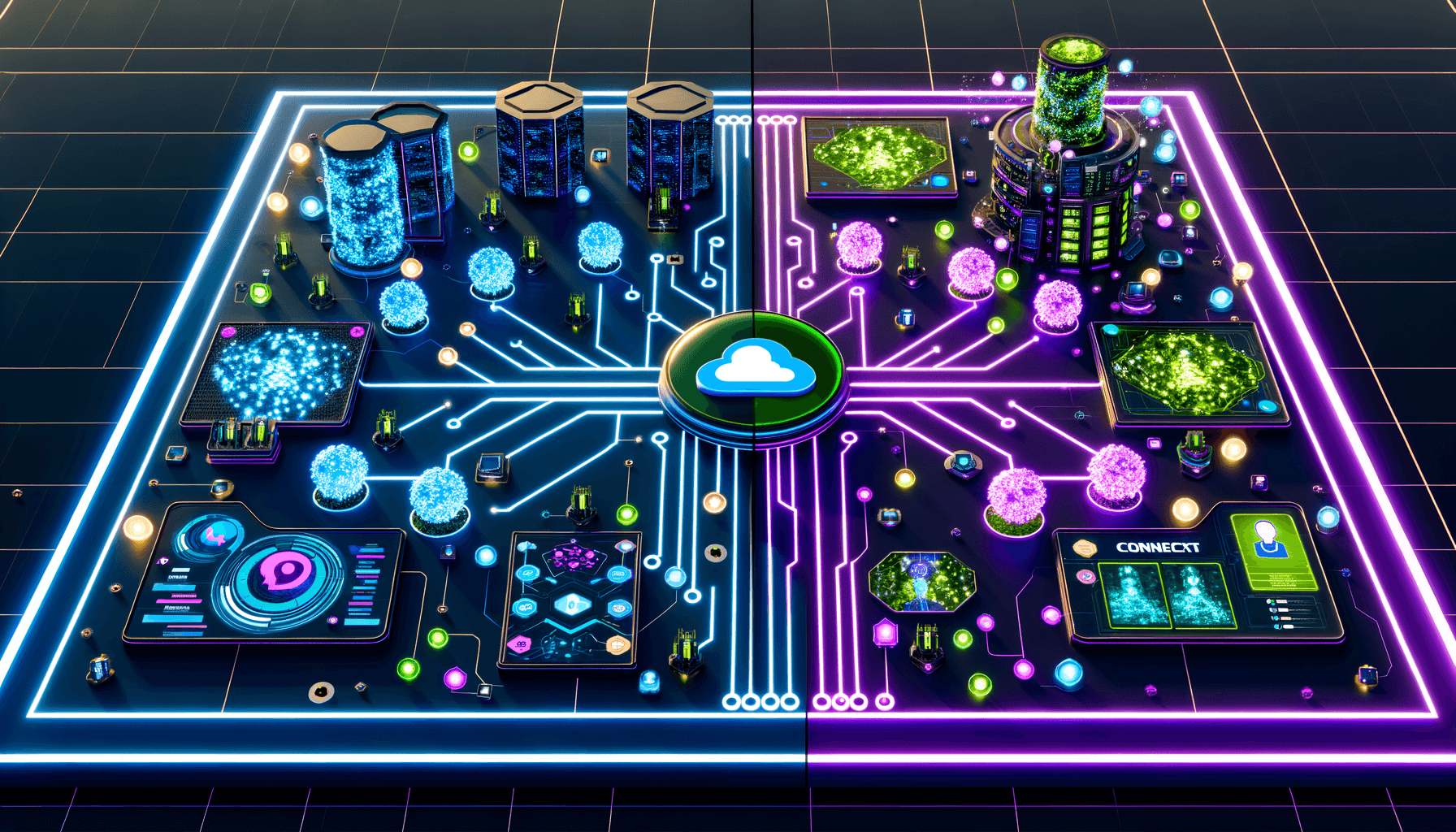
Why This Matters Now
The AI agent landscape is evolving rapidly. Two major protocols have emerged for enabling AI agents to communicate and share context: Google’s Agent-to-Agent (A2A) protocol and Anthropic’s Model Context Protocol (MCP).
For Salesforce customers exploring Agentforce, understanding these protocols is crucial for planning your integration strategy.
What is A2A?
Google’s Agent-to-Agent (A2A) protocol is designed for direct agent-to-agent communication. Think of it as a universal language that allows AI agents from different vendors to talk to each other.
Key characteristics:
- Focuses on agent interoperability
- Enables multi-agent workflows across platforms
- Standardizes how agents discover and communicate with each other
- Supports complex, multi-step agent orchestration
Use case example: A customer service agent (Agentforce) could hand off a technical issue to a specialized troubleshooting agent (third-party) seamlessly.
What is MCP?
Anthropic’s Model Context Protocol (MCP) focuses on how AI models access external data and tools. It’s less about agent-to-agent communication and more about giving agents access to the context they need.
Key characteristics:
- Standardizes data access for AI models
- Enables secure, controlled access to enterprise systems
- Focuses on context injection rather than agent communication
- Designed for enterprise data governance
Use case example: An Agentforce agent could securely query your ERP system, CRM, and knowledge base through a single standardized interface.
Key Differences
| Aspect | A2A (Google) | MCP (Anthropic) |
|---|---|---|
| Primary focus | Agent-to-agent communication | Data/context access |
| Main benefit | Multi-vendor agent orchestration | Unified data access layer |
| Architecture | Peer-to-peer between agents | Hub-and-spoke to data sources |
| Best for | Complex multi-agent workflows | Enterprise data integration |
| Maturity | Emerging | Production-ready |
Which Should You Use?
Choose A2A when:
- You need multiple AI agents from different vendors to work together
- Your workflows span multiple platforms
- You’re building complex orchestration scenarios
Choose MCP when:
- You need to give AI agents access to enterprise data
- Data governance and security are primary concerns
- You’re integrating with existing enterprise systems
The reality: Most enterprises will eventually use both. They solve different problems and are complementary, not competing.
Implications for Agentforce
Salesforce hasn’t officially announced support for either protocol yet, but the implications are clear:
- A2A support would enable Agentforce agents to participate in multi-vendor agent ecosystems
- MCP support would standardize how Agentforce accesses external data sources
For now, Agentforce uses its own integration mechanisms. But as these protocols mature, expect Salesforce to adopt one or both.
What To Do Now
- Don’t wait: Current Agentforce implementations won’t be obsoleted by these protocols
- Design for flexibility: Build integrations that can be adapted as standards emerge
- Focus on value: The protocol choice matters less than solving real business problems
Planning an Agentforce implementation? We help Salesforce customers navigate the evolving AI landscape.
Read Next
Using Claude Code and LLMs in VS Code for Salesforce Development
Learn how to integrate Claude Code and other LLMs directly into VS Code for faster Apex, LWC, and Flow development on Salesforce projects with practical setup and governance steps.
How Portals and AI Agents Are Reshaping Self-Service in Salesforce
Discover how Agentforce integrates with Experience Cloud to turn static portals into dynamic, proactive self-service experiences that resolve most customer requests autonomously.